
The HESI A2 biology section tests your knowledge of essential life science concepts like cell biology, genetics, metabolism, and basic anatomy. For many nursing students, this section is a hurdle in the admissions process. It is important to note that this biology section is considered an optional component by Health Education Systems, Inc. (HESI). Some programs require a high score in Biology to show your basic scientific knowledge, while others may not ask you to do this section and place more emphasis on Anatomy and Physiology. Before you spend hours memorizing your notes, check the requirements in our complete 2026 HESI A2 guide.
HESI Biology Topics: What Is Actually Tested?
This exam requires you to go beyond general reading and focus on HESI biology topics that will be covered. By passing, you can be sure you have the knowledge necessary for a microbiology or pathophysiology course in nursing school. Although the course syllabus is very broad, cell biology will be the foundation of the entire section. Knowing how cells work will allow you to predict the answers to more complex questions in the section.
Some HESI biology topics are the core of the exam:
- Cell Biology: Focuses on the structure of cells, the function of organelles, and how the cell membrane controls what enters and leaves the cell.
- Genetics: Covers how traits are inherited through DNA and RNA, including Mendelian genetics and how mutations can affect organisms.
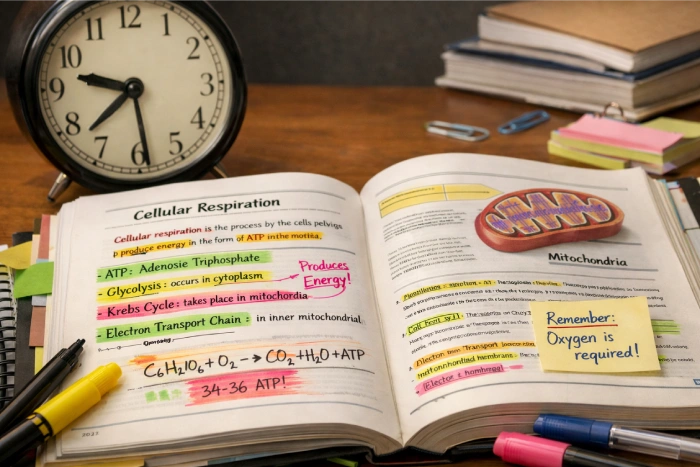
- Metabolism: Explains how cells produce and use energy through processes like photosynthesis, cellular respiration, and ATP production.
- Macromolecules: Studies the major biological molecules such as proteins, lipids, carbohydrates, and nucleic acids, along with their functions in the body.
- Ecology: Introduces basic ecosystem concepts, including how organisms interact with each other and their environment.
If you are worried about how these topics intersect with other science sections, refer to our HESI anatomy and physiology breakdown to see the bigger picture.
How Hard Is HESI Biology? (Difficulty & Pass Rate)
Many students ask, “How hard is HESI biology?” Within the context of the overall difficulty level of the HESI A2, the biology difficulty is medium. It’s not as difficult as the Grammar or Reading sections (general language skills), but it’s much less challenging than the Anatomy and Physiology section (more memorization) of the human body’s systems.
But the difficulty often lies in the way the questions are phrased. In the HESI, we rarely ask for simple definitions, but rather apply the information to the scenario at hand. For example, instead of “What is the cell membrane?”, a question might ask about osmosis and how a cell will react in a hypertonic solution. This shift from “what” to “how” is why many students consider these the most difficult HESI sections.
HESI A2 Biology Study Guide (Topic by Topic)
When creating your HESI A2 biology study guide, remember that time is a valuable commodity. You do not need to re-read the entire freshman biology textbook, but focus on memorization tips and effective recalling to ensure that the information you have learned sticks.
Study Tips by Topic:
- Cell Biology: Draw and label the parts of a cell to help learn the organelle parts visually and remember functions.
- Genetics: Experiment with Punnett squares regularly to investigate inheritance and genetic probability.
- Metabolism: Recall the steps of cellular respiration, as well as how cells produce energy.
- Macromolecules: Remember the four main biomolecules with mnemonics such as PLCN (Protein, Lipid, Carbohydrate, Nucleic Acid).
Using a study guide and active review can help you better understand and remember the ideas from the biology course during the exam. You can also look into active learning for HESI prep and other study strategies.
Biology Questions on the HESI (Question Format)
When you sit down to take the exam, be ready for the biology questions on HESI section. The section consists of about 25 to 30 questions, each of which is a multiple-choice type question with four possible answers.
The exam is an online exam, so you can do the work at your own pace, but do not rush. Because the questions are based on the test application, “distractor” answers are common. These are answers that are right on the surface, but wrong on the basis of scientific evidence. Read the entire question and all four possible answers before choosing the answer. To get a better sense of the test layout, read our article HESI exam sections decoded.
HESI A2 Biology Practice Test Strategy
If you want to see a significant score improvement, you must stop studying and start testing. A HESI A2 biology practice test is the only way to simulate the pressure and timing of the real exam.
- Establish a Baseline: Take a practice test before you even open a book. This tells you exactly what you already know and, more importantly, what you don’t.
- Targeted Review of weak topics: If your practice test shows you got 90% of the cell questions right but 20% of the genetics questions right, your path is clear.
- Study Weak Topics: Now that you know what your weak areas are, take a few days to work and improve your understanding of those topics.
- Simulate the Environment: Take your subsequent practice tests in a quiet room without your notes. This builds the mental stamina required for the 4-hour total HESI window.
Understanding the data behind your performance is vital. Read more on why practice exams are crucial and learn how to analyze your practice test results to maximize your efficiency.
Conclusion: Mastering HESI Biology
Being a smart test-taker on the HESI A2 biology section is more important than being a scientist. It’s about studying high-yield topics like cell biology and genetics, and looking for your weaknesses on practice tests.
Nursing school is competitive, and every point on your HESI is worth it. Keep the basics in mind, use your mnemonics, and keep your application skills sharp. Find out a checklist to check off before the HESI test date by reading how to pass HESI on first attempt.